
Septic Tanks
Understand what a septic tank does and how system components work together.
View Septic Tanks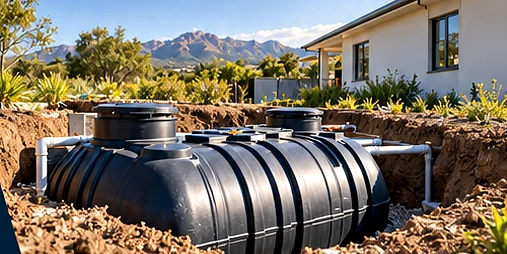
A practical guide to choosing a septic and sanitation solution for homes, lodges, farms and off-grid properties, from tank sizing to installation and maintenance.
Explore the Guide
A septic system receives wastewater from a property and uses a tank to separate solids and allow preliminary treatment. A suitable, approved downstream disposal or treatment system handles the liquid effluent.
These systems may be used where municipal sewer connections are not available. Tank selection, ground conditions, setbacks, local approvals and ongoing servicing all matter. A licensed or qualified wastewater professional should assess and design the installation.
A simplified view of how properly designed septic systems separate wastewater and direct effluent for further treatment.
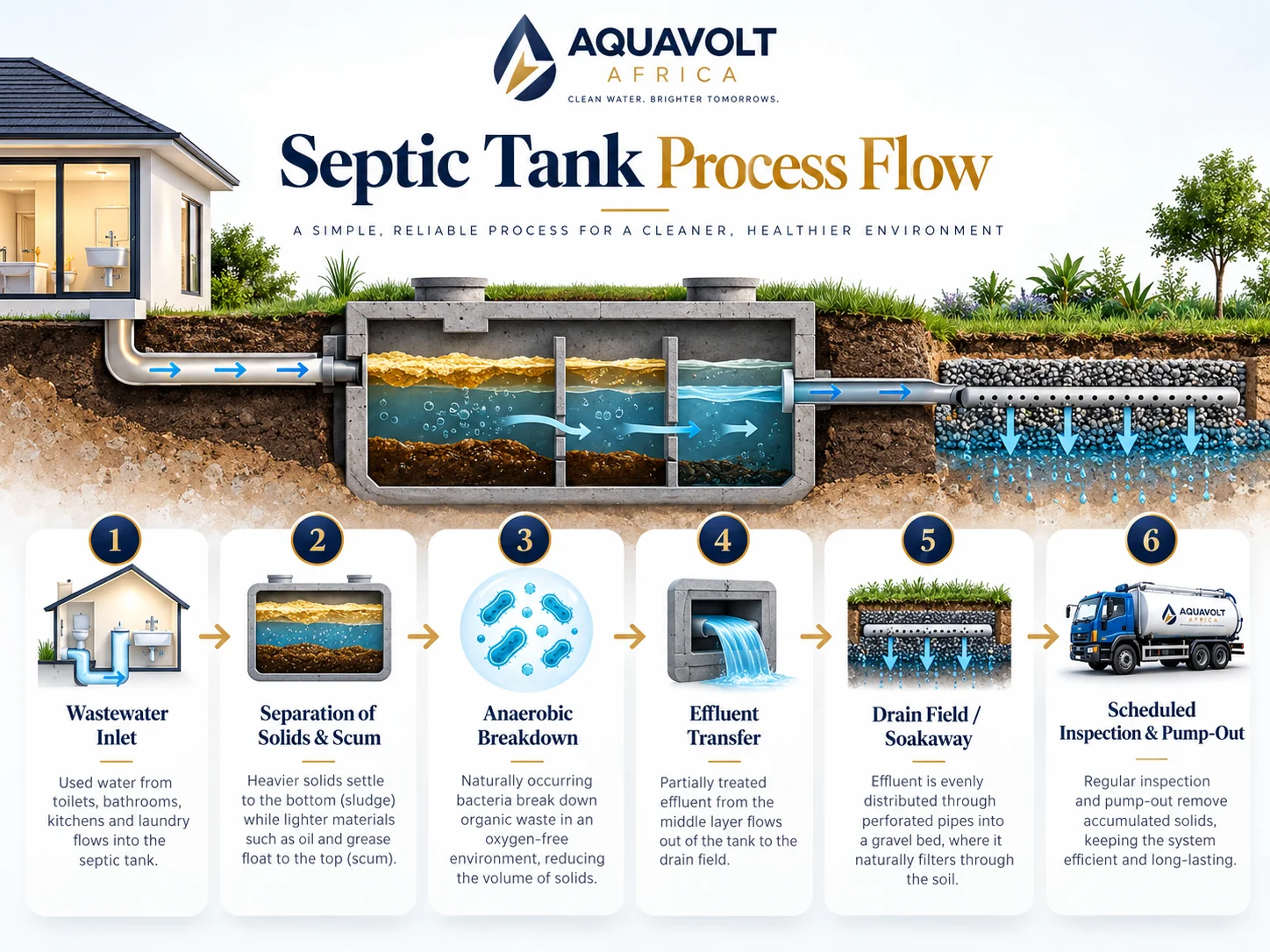
Wastewater from the building enters a correctly sized septic tank.
Heavy solids settle as sludge; grease and other light materials rise as scum.
Microorganisms partially break down organic material in the oxygen-limited tank.
Partially treated liquid passes through the protected outlet toward further treatment.
Where locally approved, effluent is distributed to a suitable soil absorption field.
Regular professional inspections and scheduled desludging keep the system working.
This is an illustrative process, not an installation specification. Site suitability, approvals, effluent treatment and safe disposal require local regulatory and qualified professional guidance.
Understand what a septic tank does and how system components work together.
View Septic Tanks
Learn about sealed holding tanks where on-site effluent disposal is unsuitable.
Read Considerations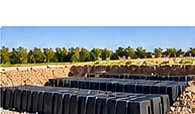
Learn why soil testing, site suitability and approvals are essential.
View Options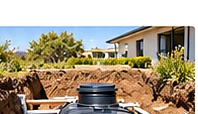
Review access, tank placement, foundations, traffic loads and servicing.
View GuideA safe wastewater system starts with an appropriate site assessment.
Consider occupancy, fixtures and whether the site is residential, farm or commercial.
Sizing depends on wastewater volumes, flow and local design standards.
Check soil, groundwater, slopes, setbacks and access for maintenance.
Plan safe servicing, inspections, pumping and long-term running costs.
Septic system work must follow local regulations, professional design and the manufacturer’s instructions.
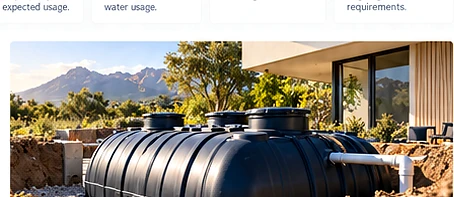
Important questions to ask when planning an on-site sanitation system.
Discuss product suitability and ask about system requirements before purchasing.